Sunday, October 23, 2011

Cushings Disease In Dogs - Mary Gardner DVM

Veterinary school teaches us about so many diseases and one in particular was a difficult  one for me to grasp. Unfortunately years later I would have to learn it really well since my Doberman Neo had it – that is Hyperadrenocorticism (HAC), also known as Cushing’s disease. 

This is a disorder in which excessive adrenal hormones are produced.  The adrenal glands are these wee little organs nestled near the kidneys. They really don’t get much attention in life – but boy – are they important. They produce a variety of hormones and when there is something wrong with them – it’s not good!

One of the main hormones the adrenal gland produces is steroids.  The adrenal glands work in concert with the pituitary gland which tells the adrenals if they need to produce more – or if they can take a rest.

Cushing’s can be caused by abnormal pituitary gland function, tumors of the adrenal gland, or by high levels of doctor prescribed steroid use.

Pituitary dependent HAC accounts for about 80% of all cases. This is when the pituitary gland doesn’t properly regulate the adrenal gland and the adrenals keep pumping out excessive amounts of steroids even though there is enough in circulation.

Tumors of the adrenal gland can be benign or malignant and in both cases, the adrenal gland produces too much steroids – even if the pituitary gland is ‘telling’ them to take a break.  This is the type of Cushing’s Neo had.  
It is a slowly progressive disease and the early signs are often unnoticed. These include increased appetite, increased drinking and urination, reduced activity, and a swollen abdomen (although not every pet will show each symptom. Neo did not have a swollen abdomen and the only thing unusual was that he was having accidents in the house). Extensive laboratory tests, radiographs (x-rays), or ultrasound may be needed to diagnose the condition, find its cause, and plan treatment.


How is it treated?
Some animals respond to medical management alone while others need both surgical and medical treatment. Control, rather than cure, is the outcome of treatment in most cases of HAC. Medical treatment depends on the type of HAC the pet has and consists of either mitotane (Lysodren) or (Lysodren) or trilostane. Patients on these medications must be closely monitored. Non-invasive adrenal tumors are best removed surgically. If adrenal hormones are suppressed too much, a condition called Addison’s disease develops and can be life threatening if untreated.


Neo had surgery to remove his adrenal gland which was one gnarly tumor.  (Unfortunately it was a malignant tumor)


What is the prognosis for Hyperadrenocorticism (HAC)?
The average life expectancy with HAC ranges from 36 months to longer with good regulation. However, clinical signs and the development of concurrent disease like diabetes may reduce this time. If HAC is caused by a pituitary tumor, the tumor may expand and put pressure on other parts of the brain causing neurologic signs and ultimately death. Infections of the skin, urinary tract, and liver are common due to the high levels of circulating steroids that suppress the immune system. Many dogs ultimately die or are euthanized due to these complications. A personalized treatment plan is important to slow the progression of HAC. 

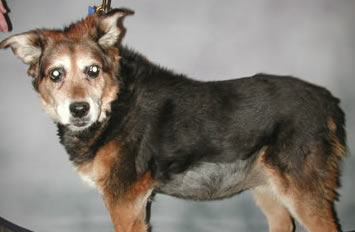
Neo after a CT scan


To read more about Neo's story and my battle with his cancer - click here


Blog post by:
Dr. Mary Gardner
(954) 778-8908

Vet Mary Gardner (click here for bio) provides In Home Hospice Care and Euthanasia services in North East Broward county Florida including: Pompano Beach, Lighthouse Point, Hillsboro Beach, Coconut Creek, Oakland Park and Wilton Manors


Dr. Nicole Sabo covers all other towns in Broward county and North Miami-Dade.

Dr. Kim Simons covers all towns in Palm Beach county.

Lap of Love has multiple veterinarians in many states - please click here to find one close to you.


Friday, October 21, 2011

Pet Euthanasia in Orlando - Orange County Florida

Lap of Love's goal is to empower owners to care for their geriatric pet and help them when the time comes to say goodbye to their furry family members.  Drs. Ross and Bellville offer Veterinary Hospice and Pet Euthanasia in the Orlando area and surrounding cities. 

Dr. Ross's says, " My hope is that I may be able to make this transition a little easier by allowing the family members to say farewell in the peace and comfort of their own home."
 
Putting a dog or cat down is a difficult decision and Lap of Love can help you with gauging your pet's quality of life. Click here for a Quality of Life Scale.
Our furry family members take all shapes and sizes - Dr. Bellville can also assist families with exotic species such as hamsters, rabbits, ferrets, and birds. 

Both veterinarians are University of Florida College of Veterinary Medicine graduates and live in the Orlando area.


Feel free to contact them for more information or to help assist you in determining 'when the right time is'.

Dr. Christine Ross
drchristine@lapoflove.com
(407) 487-4445
Orange, Osceola, and Seminole counties including Orlando, Winter Park, Altamonte Springs, Oviedo, Kissimmee and surrounding areas. Dr. Christine will, on occasion, assist families in Melbourne and Daytona area. This requires advance notice to help schedule for the drive.


Dr. Michelle Bellville
drmichelle@lapoflove.com
(407) 487-4655
Orange, Osceola, Polk, and Lake counties including Orlando, Kissimmee, St. Cloud, Poinciana, Windermere, Celebration, Clermont, Lakeland, and surrounding areas.


Blog by:
Vet Mary Gardner
Lap of Love Veterinary Hospice and In Home Euthanasia
www.lapoflove.com
Follow us on Facebook

Wednesday, October 19, 2011

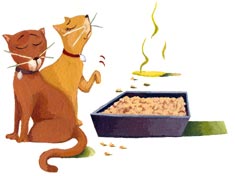
Cat Peeing Outside The Box - What to do!


Urinary problems in cats

People often think that when a cat urinates outside his litter box, he is “being bad,” and they aren’t sure what to do to fix the problem.  There are many reasons cats urinate in inappropriate places, some of which are behavioral and some of which are medical.  The first step in determining why your cat is urinating outside the box is to address any medical issues that might be present. 

One of the simplest causes for inappropriate urination in a cat is a urinary tract infection, which means an infection in the bladder or kidneys.  Just as in people, this condition can be painful and can cause your cat to feel like he has to urinate frequently.  However, unlike people, your cat can’t tell you what he’s experiencing.  This means it is important to bring your cat to a veterinarian to have him evaluated for any medical reason for urinating in inappropriate locations.
 Cats, and particularly male cats, can form small stones in their bladder which can get stuck in their urethra, the tube leading out from the bladder.  If this happens, it is a serious emergency, and your cat needs to go to your veterinarian or an emergency facility immediately.  While there are other medical reasons for a cat to urinate outside a litter box, this is something your veterinarian can discuss with you if necessary.


Anyone who has cats knows that they are very particular about everything, and their litter boxes are no exception.  One of the biggest reasons cats will go outside their box is that the cat is dissatisfied with the current litter situation.  This can be caused by a variety of reasons; each cat has his own particular likes and dislikes, including the type of litter and box, and location.  There are a tremendous variety of types of litter, including clay, pine, wheat, newspaper, and silica gel (crystals).  When a cat urinates near the box or standing on the edge of the box, this can indicate an aversion to the substrate.  Setting up a litter box “buffet” with several types of litter can be a good way to determine exactly which type your cat likes.

A large Rubbermaid bin is perfect 


Cats are also very picky about the box itself, and this has to be tailored to your cat’s personality.  Bigger cats like a larger box with plenty of room, and may refuse to use a litter box that is too cramped.  The litter box should be at least one and half times the length of the cat (not including his tail).   


Older cats can have arthritis and may require a box with a lower front to make entering easier.  Timid cats are easily frightened by the noise an automatic litter box cleaner makes.  Many cats do not care for covered boxes because they can trap odors.  Although it makes cleaning much easier, many cats do not care for litter box liners.

The location of a litter box can be an important factor as well.  Most cats are private animals, and do not like their humans to witness their bathroom habits, so putting the litter box in a secluded spot promotes cat comfort.  High traffic areas or ones with loud noises, such as laundry rooms, can be frightening to your cat.  Cats also do not like to have their litter boxes too close to their food and water, so maintaining these in separate areas is important to keep your cat content.

Finally, litter boxes should always be kept clean.  People flush the toilet after each use, and cats would love to have this policy as well.  The average adult cat uses the litter box five times each day.  Litter boxes should be cleaned at least once daily, and the box should be scrubbed out with bleach or other sanitizer at least once weekly.  The number of litter boxes in a house is also an important factor; your home should have one litter box per cat per floor, plus one.  For example, if you have two cats and two floors, there should be three litter boxes per floor.  


If your cat has helped you find exactly what kind of litter and box he likes, and is in the proper location, and he has no underlying medical issues, but you are still finding urine outside the box, the problem may be due to territorial marking.  One solution to this problem can be neutering or spaying your cat if he or she is still intact.  Another option is the use of feline facial pheromones which can have a calming effect on cats.  This pheromone, known as Feliway, comes as a spray or plug-in diffuser, and should be used on the area being marked twice daily to eliminate marking activity.


It is important medically for a cat to feel free to use his litter box as often as needed.  For example, a cat who doesn’t defecate in his litter box regularly can become constipated, which can lead to the development of a chronic condition called megacolon, which occurs when the nerves in the colon no longer function as they should.  A cat who doesn’t urinate consistently can develop an infection of the urinary tract, which can lead to the formation of bladder or kidney stones.  Cats are extremely complex creatures, and keeping them emotionally content can result in excellent medical health as well.  And any cat owner will agree that keeping your feline friend happy also keeps owner happy!

Blog by:
Dr. Juliana Lyles
Lap of Love Veterinarian
Pet Hospice and In Home Euthanasia
drjuliana@lapoflove.com
(910) 759-3656


Dr. Juliana helps families with in home Pet Hospice and Euthanasia services in the Fayetteville and surrounding areas including Fort Bragg, Lillington, Southern Pines, Sanford, Lumberton, Clinton and Raeford. 

Monday, October 17, 2011

Arthritis and Bone Cancer Pain in Dogs and Cats

What Can I Do About My Pet’s Arthritis
Or Bone Cancer Pain?

What is arthritis?


Osteoarthritis is a chronic degenerative disease that may affect any joint but is commonly found in a pet’s hip, elbow, shoulder, stifle (knee) , carpus (wrist), hock (ankle) or intervertebral joints (in the spine).  It occurs when cartilage in the joint is damaged, either following a traumatic event or with wear and tear that increases in athletic animals, obese animals, or when the joint is congenitally (born that way) abnormal.


 Cartilage decreases joint stress by reducing impact on the ends of the bones in joints, like a shock absorber.  When cartilage is damaged inflammatory changes occur, leading to destruction of the cartilage and then damage to the underlying bone.  
 
Signs of arthritis include:  Reluctance to take walks of usual length, stiffness that may disappear once the pet has ‘warmed up’, difficulty climbing stairs, climbing in the car, on the bed or a sofa, rising from rest, limping, licking of a single joint, acting withdrawn, spending less time playing with family, soreness when touched, and sometimes aggression when touched or approached.

Key points about Arthritis:
  • Signs of arthritis may be subtle and easy to miss
  • Cats may be reluctant to jump up on surfaces they used to get on.  They may have litter box accidents if they are having difficulty getting in and out of the box.  They may also just subtly slow down.
  • Early treatment of arthritis is critical to slow progression of the disease
  • Maintaining lean body weight  is absolutely critical for arthritic patients
  • Newer concepts of arthritis management involve proper exercise to maintain muscle mass and decrease pain
  • Non-skid surfaces in the home, padded bedding, raised bowls, and ramps are ways to minimize they pet’s efforts to maintain comfort, stability, balance, or mobility.
  • Structure-modifying agents are most effective when started early and maintained long term
  • Nonsteroidal anti-inflammatory and analgesic drugs, acupuncture, and physical therapy may be recommended for later stages of the disease


What can I do for my pet?
  • Weight Reduction: Ask your doctor about your pet’s body condition score (BCS), which should be normal or slightly underweight.  If your pet is overweight, have your pet’s bloodwork evaluated for diseases that can contribute to obesity, and discuss a weight loss diet with your veterinarian.
  • Controlled Exercise:  Low-impact exercise is best; swimming or walking through shallow water is ideal.  Leash walking and controlled jogging are also acceptable.  Exercise for cats is important, too!
  • Nutraceuticals:  Synergistic combinations of nutraceuticals such as glucosamine/chondroitin sulfate contain compounds that support cartilage structure, prevent further deterioration, suppress inflammation, and reduce free radical damage.
  • Injectable Chondroprotective Agent: Talk to your veterinarian about an injectable agent that helps preserve cartilage in the joints.
  • Acupuncture and Massage: Both of these therapies may provide additional non-drug pain control. Ask your veterinarian.
  • Therapeutic Laser: We can use laser therapy on a number of different tissues including bone tumors, to decrease pain and boost the natural healing process in patients.  The effects of using laser light can speed up the healing process dramatically while decreasing the amount of scar tissue build up and increasing the pliable strength of wounds.  Lasers provide pain relief by stimulating the release of endorphins, activating natural anti-inflammatory cascades and increasing blood flow to damaged tissues.  Talk to your veterinarian about this pain reducing modality.
  • Prescription Drugs: Drugs are available that can reduce inflammation and suppress pain in pets with more advanced disease.  Side effects can be minimized by monitoring your pet’s blood work regularly. See below under bone cancer for the different pain control drugs.
Bone Cancer Drugs
No single medication is a match for the pain involved in what amounts to a slowly exploding bone. A combination of medications is needed to be palliative and should be considered only as a last resort if amputation or radiation therapy will not be pursued. There are several types of drugs that can be combined.
 
Bisphosphonates
This class of drug has become the standard of care in humans with bone tumors yet bisphosphonates have not become as common a part of veterinary practice for this condition. Bisphosphonates act by inhibiting bone destruction, which in turn helps control the pain and bone damage caused by the bone tumor. The most common bisphosphonate in use for dogs is pamidronate, which is given as an IV drip over two hours in the hospital every 3 to 4 weeks.  Because bisphosphonate seem to be well tolerated, relatively inexpensive, and useful in numerous bone-destroying cancers, we expect to see this class of drug used more and more in small animal practice.


Non-Steroidal Anti-Inflammatory Drugs (NSAIDs)
There are many anti-inflammatory pain relievers developed for dogs and a couple that are used less frequently in cats.  These are typically given once or twice daily in tablet form at home. The patient should have good liver and kidney function in order to take medications of this class.  While there are NSAIDs commonly used by people, do not use these human medications on your pet without consulting a veterinarian.


Narcotic Pain Relievers
While these drugs do not have anti-inflammatory properties, they are well-known analgesics and have been used in an assortment of forms for thousands of years. They are particularly useful in chronic pain because they do not interact negatively with other pain relievers. Drowsiness is a potential side effect. Tramadol has been particularly popular as part of a drug combination for bone cancer pain but there are others that might also be considered, such as a fentanyl patch, buprenorphine, and other narcotics.
 
Miscellaneous Supplemental Pain Relievers
There are two drugs that are used as additional pain relievers for animals with chronic pain: gabapentin and amantadine. They work on neurologic pain, and in the treatment of arthritis, surgical pain, and other chronic pain states. 


For more information on this and other common diseases our pets get - please click on this link to learn more. 

Blog by:
Dr. Dana Lewis
Lap of Love Veterinarian
Pet Hospice and In Home Euthanasia
drdana@lapoflove.com
(919) 439-5922
Dr. Dana services the Raleigh North Carolina area including - Raleigh, Durham, Chapel Hill and the greater Triangle, as well as Wake, Durham, Orange, and Chatham counties.

Thursday, October 13, 2011

Chew Toys For Dogs - What Is Safe?


Does your dog love to chew? Here is some helpful information on safely satisfying your canine friend’s urge to chew. 

Chewing is a natural behavior for dogs. Because chewing can reduce canine stress and help minimize other behavioral problems that can develop from boredom, in most cases it is good to provide your dog with safe toys and outlets for chewing. However, like anything else – allow your dog to chew in moderation! While some chewing is good, too much can cause excess wear and damage to the teeth. Also, with ANY "safe" item to chew, there is always the potential risk of choking and gastrointestinal blockage. I worked for a veterinary dental specialist last year, and her favorite expression is “there are NO safe chew toys” - she repairs the broken teeth and damage on a daily basis. 

Ouch!


If you research this topic on the internet, or speak with your vet, you can be overwhelmed with the differing opinions that you read or hear. For example, are rawhides safe? The answer is that there is always a risk, and this risk is larger for dogs who gulp or if they are permitted to swallow larger pieces or the ends of the chew. I have also removed rawhide and other bones surgically from dogs. Just a couple of weeks ago at the ER we performed endoscopy to remove a small rawhide fragment from the esophagus of a dachshund.

My favorite chew toys and activity toys for canine patients:
A 'no-no' for a treat!
  • Kong's stuffed with a number of tasty items - they can even be frozen so that it takes longer to lick out the tasty filling:  http://www.kongcompany.com/
  • Busy Bone, especially the bouncy ball
  • Nylabones
  • Galileo bone
  • Orbee line of toys from Planet Dog


For any of the harder toys listed, again, dental complications are a true concern. As long as you know the risks you can make an informed decision.

For rawhides, always use a rawhide that is too large for your dog, and take the last of it away before it is chewed down to swallowing size. Definitely avoid rawhide that has knots at the end. 

(this is not Gracie! :))
I will admit that I personally give my dog a periodic rawhide under CLOSE supervision. My lab Gracie drifts off into this zen-like state as she chews the bone – I just love seeing her so happy! -  but I never give the kind with knots on the end, and I always remove the last bit of rawhide before she can swallow the last chunk whole. 

Here is a great handout on chewing and using toys as tools:

Blog written by: Laura Bacon, DVM
Lap of Love 
Pet Hospice

Tuesday, October 11, 2011

Roundworms In Dogs and Cats


Intestinal parasites are a common infection of dogs and cats. Roundworms (Ascarid) are one of those parasites that can infect our dogs and cats and can also pose a threat to humans.

Roundworms are contracted a number of ways:

1.  Contaminated soil that harbors the parasite
2.  Via embryonic development while in utero
3.  Puppies ingest the parasite via the mothers milk


Roundworm infection can lead to vomiting, diarrhea, pot belly appearance, unthriftiness and pneumonia.    


But treatment with a number of available products (dewormer, Sentinel, Heartgard) is very easy and effective in resolving the infection. 

 
Human exposure is also a possibility and the infection is more likely in children and pregnant mothers.  Roundworm infection in humans can cause " visceral larval migrans".  This often leads to migration of the worm into the eyes causing blindness. (click here to see picture)

Prevention of parasitism is key for your pet's health as well as your own. Your pet should be on a monthly heart worm preventative which also contains a intestinal parasiticide.  In addition your pets stool should be picked up and disposed of to keep the environment clean.  

For more information visit the Companion Animal Parasite Council.

Kim Simons, DVM
Pet Hospice and In Home Pet Euthanasia